

A Monumental Revival of Timeless Scholarship
For the first time in history, the Fatawa Ridawiyya — the encyclopedic legal compendium of Imam Ahmad Rida Khan al-Qadri — is being rendered into Arabic and translated for the benefit of students and scholars worldwide.
The 13-Year-Old Mufti: The Extraordinary Origins of Fatawa Ridawiyya
WHY THIS WORK MATTERS
This is not just a translation. It is a revival.
The Fatawa Ridawiyya stands as one of the greatest intellectual legacies in the Islamic world — an ocean of rulings, insights, and proofs that have guided generations. Until now, this masterpiece has remained largely inaccessible to the Arabic-speaking scholarly world.
This project aims to preserve this magnum opus by producing a faithful Arabic rendition and translation, published volume by volume, with meticulous care and scholarly precision.
This is not just a translation. It is a revival. It is an opening of doors for seekers of knowledge across continents.
Latest Update
PART I: Al-Muqaddima
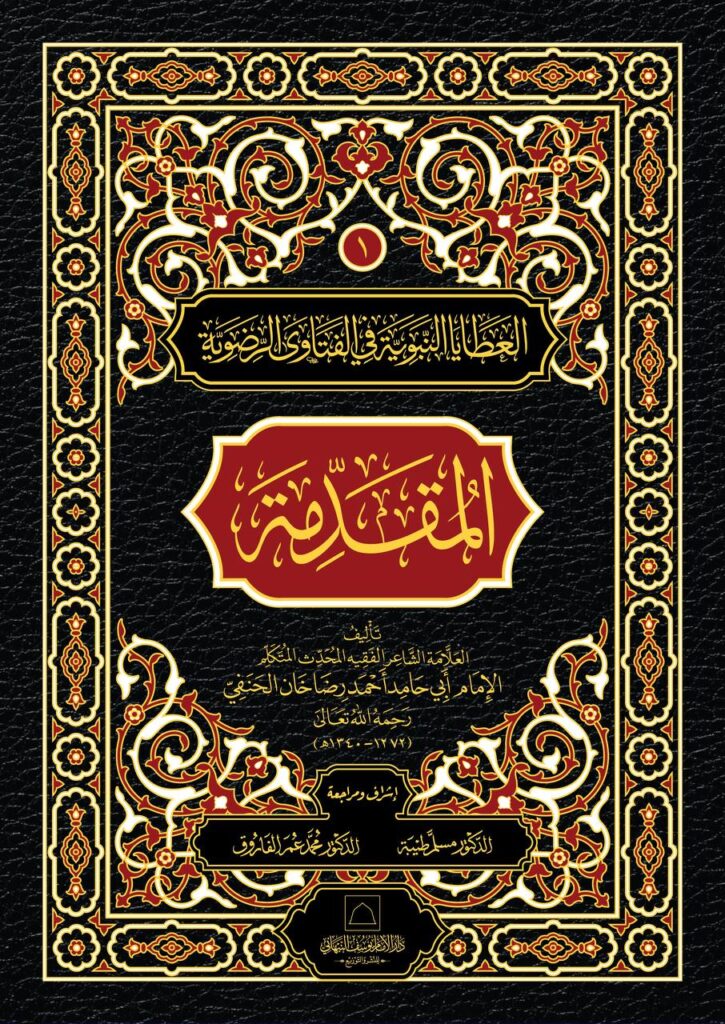
AL-Muqaddima — The Introduction | Opening the Gates of the Fatawa Riḍawiyya
- Published: 1447AH
- Supervised by: Dr. Msallm Taibeh and Dr. Muhammad Umar Farooq.
The first part, namely Imam Ahmad Rida Khan’s very own introduction, serves as a preamble to the remaining volumes of his work.
In this introduction, he sets out to explain his natural affinity towards the love for Hanafi Fiqh and issuing fatawa. This is epitomised in his exceptional chain of narration [sanad] to the Great Imam, Abu Hanifa (may Allah be pleased with him), linking each generation with masters of this grand tradition. Additionally, this inaugural part contains the principles of issuing fatwa in the Hanafi School.
SUPPORT THE PROJECT
Be Part of a Legacy That Will Outlive Generations
Great works are not preserved by paper and ink alone — they are carried forward by those who support them. By contributing to this project, you become a partner in a monumental effort: ensuring that the wisdom of Imam Ahmad Rida Khan reaches scholars, students, and seekers across the world.
This is more than support. This is sadaqah jariyah — an eternal charity.
Frequently asked questions
FAQs
What is Fatāwā Riḍawiyya?
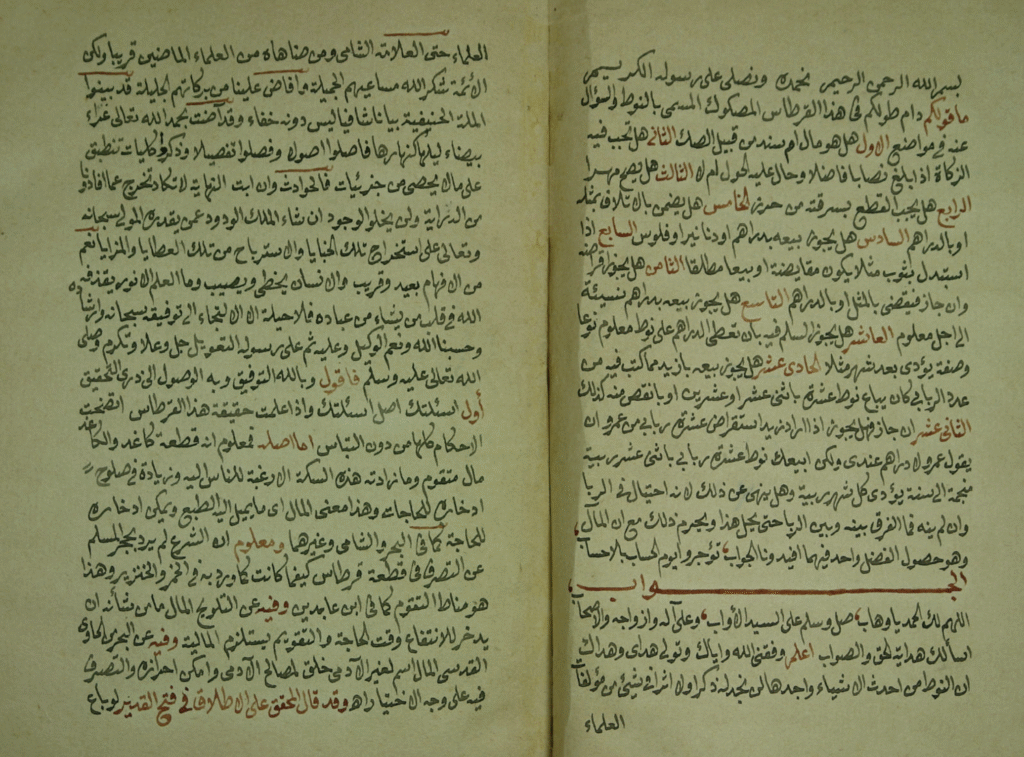
Fatāwā Riḍawiyya is one of the largest and most comprehensive Hanafi legal encyclopaedias of the modern era, authored by Imam Ahmad Rida Khan (1856–1921). It contains nearly 7,000 fatwas together with hundreds of scholarly treatises covering every major area of Islamic law, theology, spirituality, worship and contemporary issues of its time.
For more than a century, it has remained one of the most authoritative references within the Hanafi tradition in the Subcontinent.
Who was Imam Ahmad Rida Khan?
Imam Ahmad Rida Khan was one of the foremost Hanafi jurists, theologians and hadith scholars of the last two centuries. His mastery extended across numerous Islamic sciences, and his legal verdicts continue to be relied upon by scholars around the world.
His works demonstrate an exceptional depth of scholarship while remaining firmly rooted in the Qur’an, Sunnah and the classical Hanafi tradition.
Why must Fatāwā Riḍawiyya be translated into Arabic?
Arabic is the international language of Islamic scholarship. Although Fatāwā Riḍawiyya is recognised as one of the greatest Hanafi legal works produced in the Indian subcontinent, its original Urdu has prevented many scholars from accessing it directly.
An Arabic translation will:
• Make the work accessible to scholars, muftis and students worldwide.
• Preserve Imam Ahmad Rida Khan’s juristic legacy for future generations.
• Enable the wider scholarly community to engage with nearly 7,000 fatwas and hundreds of treatises.
• Allow this monumental work to take its place alongside other major Arabic works of Hanafi fiqh taught across the Muslim world.
Why hasn’t it been translated before?
The sheer scale and complexity of the project have made it an enormous undertaking. Translating Fatāwā Riḍawiyya requires scholars who possess expertise in:
• Classical Arabic
• Classical Urdu
• Hanafi jurisprudence
• Hadith
• Tafsir
• Islamic legal terminology
• Academic editing and manuscript verification
Such expertise is rare, and assembling a qualified team capable of undertaking this work has taken considerable planning
Is this simply a translation?
No.
This is both a critical scholarly edition and a complete Arabic translation.
The project involves:
• Careful translation into scholarly Arabic.
• Verification against original source material.
• Critical editing and research papers.
• Checking Qur’anic verses, hadith references and legal citations.
• Academic editing.
• Proofreading by qualified scholars.
• Professional typesetting before publication.
The objective is not simply to translate words but to produce a reliable scholarly edition that can serve researchers and students for generations.
Who is carrying out the translation?
The project is being undertaken by Dār al-Imām Yūsuf al-Nabhānī through a dedicated team of qualified scholars specialising in:
• Hanafi fiqh
• Arabic language
• Urdu
• Research
• Critical Editing
• Manuscript verification
Each volume undergoes multiple stages of review before publication to maintain the highest academic standards.
What exactly are donations being used for?
Every donation directly supports the production of this landmark scholarly work.
Funds are used for:
• Salaries for qualified translators and researchers.
• Scholarly editing and peer review.
• Purchasing reference works and manuscripts.
• Professional Arabic typesetting.
• High-quality printing and publication.
Your donation supports the scholars dedicating years of their lives to preserving and transmitting this knowledge.
Why does a project like this take so long?
Unlike an ordinary translation, this project requires extensive research and multiple layers of academic review.
Every section must be:
• Accurately translated.
• Compared against the original text.
• Checked for linguistic precision.
• Verified for legal and theological accuracy.
• Reviewed by senior scholars.
• Professionally typeset before publication.
Given the size of Fatāwā Riḍawiyya, this meticulous process naturally takes several years.
Can it even be done?
Yes—in fact, the project is already underway.
Rather than being an idea awaiting funding, this is an active scholarly project with a structured methodology, qualified translation team and long-term vision.
Translation, editing and verification are progressing volume by volume, with the aim of producing a lasting scholarly resource that will benefit the Ummah for generations, in shā’ Allāh.
How large is Fatāwā Riḍawiyya?
It is one of the largest collections of Hanafi legal verdicts ever compiled in the modern era.
The work contains:
• Nearly 7,000 fatwas
• More than 400 scholarly treatises
• Tens of thousands of references to the Qur’an, Hadith and classical Hanafi works
Its breadth makes it one of the most comprehensive legal references available within the Hanafi school.
Will the completed Arabic edition be publicly available?
The intention is to publish the completed work in high-quality printed volumes so that scholars, students and institutions throughout the Muslim world can benefit from it.
By supporting the project today, donors are helping to make this invaluable scholarly resource accessible to future generations.
Can my donation be a form of Ṣadaqah Jāriyah?
Definitely, in shā’ Allāh.
Supporting the preservation and transmission of authentic Islamic knowledge is among the most rewarding forms of ongoing charity.
Every scholar, student or reader who benefits from this work has the potential to become part of an ongoing chain of reward for those who helped make its publication possible.
Can I donate on behalf of a deceased loved one?
Yes.
Many supporters choose to donate with the intention of gifting the reward to parents, relatives or loved ones who have passed away, hoping that Allah grants them continuous reward through this enduring contribution to Islamic scholarship.
How can I continue supporting the project after donating?
There are many ways to continue helping:
• Become a monthly donor.
• Share the campaign with family and friends.
• Encourage others to donate.
• Introduce potential major donors.
• Invite your local masjid or organisation to support the project.
• Help organise fundraising within your community.
Even sharing the campaign can be a means of earning reward if it inspires others to contribute.
Can I volunteer to help the campaign?
Yes.
The project welcomes individuals who can assist by:
• Promoting the campaign online.
• Introducing community leaders and scholars.
• Helping organise local fundraising.
• Sharing campaign materials through WhatsApp and social media.
• Connecting the project with potential donors and supporters.
Every contribution—whether financial, practical or promotional—helps bring this historic project closer to completion.
Can my donation be increased through Gift Aid?
If you are a UK taxpayer, your donation may be eligible for Gift Aid, allowing the charity to claim an additional 25p for every £1 donated, at no extra cost to you.
Where applicable, this significantly increases the impact of your contribution and helps fund even more of the translation and publication work.
Why should I support this project?
Few opportunities arise to help preserve a work of Islamic scholarship that will continue benefiting the Ummah for centuries.
By supporting the Arabic translation of Fatāwā Riḍawiyya, you are helping to:
• Preserve one of the greatest Hanafi legal works ever written.
• Make it accessible to scholars across the world.
• Support qualified scholars engaged in this vital work.
• Leave behind a legacy of ongoing knowledge and benefit.
Is this project Zakat eligible?
No. This project is not Zakat eligible.
The Arabic translation of Fatāwā Riḍawiyya is a scholarly publishing and knowledge preservation initiative. While it is a highly rewarding cause and an excellent opportunity for Ṣadaqah Jāriyah, it does not fall within the categories of recipients eligible to receive Zakat.
We therefore encourage supporters to donate from their voluntary charity (ṣadaqah), seeking the immense reward of preserving and disseminating authentic Islamic knowledge for generations to come.